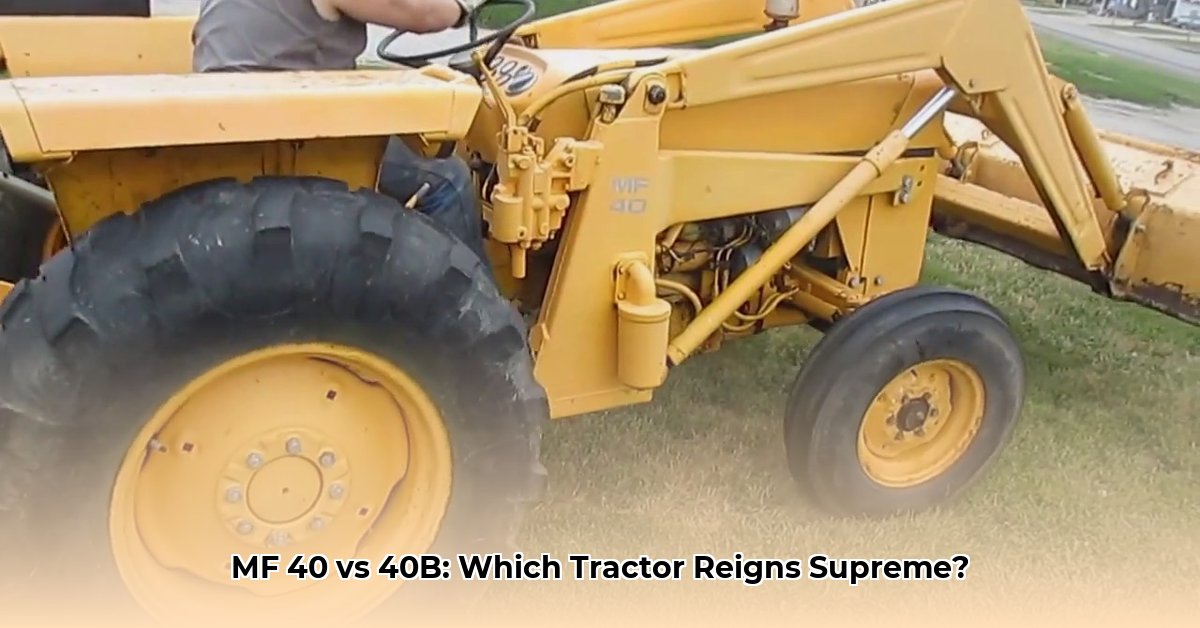
Choosing the right tractor is a critical decision for any farmer. This comprehensive guide compares two popular Massey Ferguson models, the MF 40 and the MF 40B, helping you decide which best suits your needs and budget. We'll analyze key features, highlighting the strengths and weaknesses of each to inform your purchasing decision.
Engine Power and Efficiency
The MF 40 typically features a three-cylinder engine, delivering approximately 45 horsepower (hp). This provides sufficient power for lighter tasks such as tillage in smaller fields or operating smaller implements. The MF 40B, however, boasts a more robust four-cylinder engine, generally producing around 54 hp. This increased power allows for more effective handling of larger fields and heavier implements. Precise fuel consumption data for both models is currently unavailable, making a direct comparison on fuel efficiency difficult. However, it's reasonable to assume that the more powerful MF 40B will likely consume more fuel than the MF 40. Which engine better suits your needs depends on the scale and intensity of your operations.
Hydraulic Systems
Hydraulic performance is another key differentiator. The MF 40B generally offers a more substantial hydraulic system compared to the MF 40. This often translates to greater lift capacity and smoother operation, especially when using heavier attachments such as front-end loaders. The MF 40B's improved hydraulics allow for increased efficiency in tasks requiring significant lifting power. While specific pressure and capacity figures vary depending on the individual tractor configuration, the MF 40B generally outperforms the MF 40 in this regard.
Transmission Options
Both tractors typically utilize manual transmissions, although variations exist within each model line. Some MF 40Bs may incorporate features like instant reverse, enhancing operational efficiency, particularly in tasks requiring frequent direction changes. Consider your preferred operation style—the simplicity of a standard manual transmission versus the convenience of additional features like instant reverse. The optimal transmission choice depends largely on personal preference and the specific tasks involved.
Operator Comfort and Safety
Operator comfort and safety are crucial considerations, particularly during long workdays. The MF 40B often provides enhanced safety features compared to the MF 40. This may include an optional cab and a Roll Over Protective Structure (ROPS), offering important operator protection. The absence of these features on many MF 40 models emphasizes a significant improvement in safety design in the newer MF 40B. The addition of a cab provides enhanced comfort and environmental protection.
Tire Options and Suitability for Different Soil Conditions
Tire size plays a significant role in traction and stability. The MF 40 often features smaller tires, which may be suitable for lighter work and well-maintained fields. The MF 40B, conversely, typically comes equipped with larger tires, offering enhanced grip and stability, especially in challenging conditions like muddy or hilly terrain. Therefore, the choice of tractor depends heavily on your field conditions.
Maintenance and Repair
Predicting maintenance costs for either model requires a thorough understanding of the tractor's operational history and condition. However, the MF 40's simpler design may lead to easier repairs and lower maintenance costs compared to the MF 40B. Conversely, the MF 40B's more advanced systems could involve more specialized tools or potentially higher repair expenses. Thorough pre-purchase inspections are highly recommended for both models. Prioritizing parts availability in your local area is crucial before committing to either tractor.
Cost Analysis: Total Cost of Ownership (TCO)
A precise cost comparison requires detailed financial data including initial purchase price, fuel consumption rates, maintenance expenses, and projected resale value. Without these precise figures, a definitive TCO comparison is unreliable. However, it's essential to factor in all these aspects when making your decision. The initial purchase price of the MF 40B is generally higher; however, its potential for increased productivity might offset the higher initial investment over the long term. Conversely, the MF 40’s lower initial cost may be attractive, but its reduced capabilities could lead to reduced productivity and efficiency.
Conclusion
The ideal tractor—MF 40 or MF 40B—depends on your specific farming needs and budget. The MF 40B offers improved power, hydraulics, and safety features but commands a higher price and potentially higher maintenance costs. The MF 40 provides a more basic, economical option better suited for smaller operations and less demanding tasks. Carefully assess your workload, budget, and long-term maintenance considerations before purchasing either. Always conduct a thorough pre-purchase inspection and seek professional advice if necessary.
Call to Action
To make an informed decision, research your specific needs. Contact your local Massey Ferguson dealer for detailed specifications, pricing, and expert advice tailored to your farm operation. Remember to consider your budget, as well as the potential long term costs associated with each machine.